
From Empty Corners to Earning Assets: How Your Unused Space Can Work Harder for You
In a recent guest article with Regional Gateway, Andrew Van Eeden, Managing Director EMEA at Airport Dimensions, explores how airports can rethink underused terminal space to better support evolving passenger needs while unlocking new commercial opportunities.
Airports today are so much more than places to catch a flight. They are becoming more like hospitality hubs, where travelers expect comfort, convenience, and ideally to find a sense of calm before they reach their destination. While our Airport Experience research which surveyed over 11,000 travelers across 17 countries shows overall passenger satisfaction has reached 82%, there is still a clear opportunity for airports to rethink how they use their space - especially the areas that often go unnoticed or unused.
Across many terminals, there are hidden corners that don’t contribute much, either to the passenger experience or the airport’s revenue. These might be old storage rooms, quiet corridors, or even decommissioned gates. Traditionally, these spaces have been overlooked because they don’t suit retail or high-footfall services. But with changing passenger expectations, they are starting to look more and more like untapped opportunities.
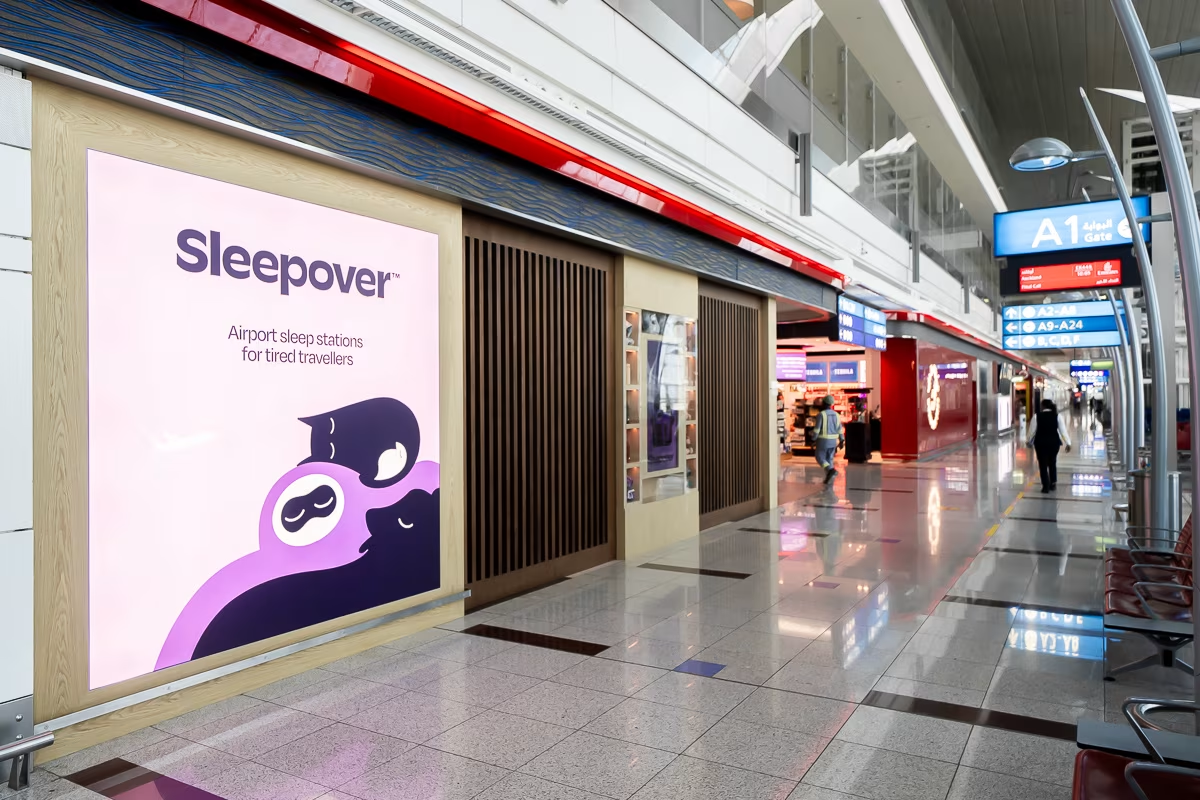
This is the thinking behind Sleepover, a sleep station concept pioneered by Airport Dimensions. The idea is simple: turn underused areas into private, comfortable rest spaces that passengers can book by the hour, thereby transforming unloved airport corners into valuable assets that meet a real need while also generating income.
Bridging the sleep debt gap
Modern travel is taking a real toll on people’s energy and wellbeing levels. Increasingly, passengers are arriving at the airport already tired, and their journey only adds to that fatigue. Our research shows that 8 in 10 holidaymakers experience travel-related “sleep debt,” losing an average of 4 hours and 42 minutes of sleep per trip1.
For business travelers, the impact is even more pronounced. An overwhelming 96% of frequent international flyers report accumulating sleep debt, which directly affects their ability to concentrate and make decisions. This fatigue doesn’t just stay personal- it spills over into professional life. In fact, 41% of business travelers have had to rebook meetings due to exhaustion, while 28% have canceled them altogether.
These figures highlight a growing gap between what travelers need and what airports can currently provide. Traditional waiting areas and seating zones are not designed for proper rest, and quiet spaces often fall short of expectations. As a result, passengers are left trying to recover in environments that are not fit for purpose.
Turning layovers into profitable earning assets
While sleep deprivation is a personal challenge for travelers, it also represents a commercial opportunity for airports. Delays, long connections, and unavoidable flight schedules mean passengers often spend extended periods in terminals. In fact, 45% of leisure travelers say their sleep loss is directly linked to layovers or flight timings.
This creates a steady flow of demand for spaces where people can rest and reset. Instead of viewing layovers as dead time, airports can turn them into valuable moments, benefiting both passengers and the bottom line.
Flexible, pay-by-the-hour rest solutions are key to this shift. They allow travelers to tailor their experience to the time they have available, whether that’s a quick nap or a longer sleep. What was once an uncomfortable wait becomes a useful and even enjoyable part of the journey.
There is also a clear demand for privacy. Only 67% of travelers say they are satisfied with the availability of private areas away from crowds, leaving a significant shortfall in expectations versus reality. Dedicated rest spaces directly address this need, offering a calm, enclosed environment that feels far removed from the busy terminal.
Importantly, passengers are already showing a willingness to spend on improving their experience. Despite 82% of travelers flying in economy or low-cost cabins, they spend an average of $95 per trip on upgrades within the airport. This demonstrates a clear appetite for services that enhance comfort and wellbeing.
The Sleepover advantage: reimagining terminal infrastructure
Meeting this demand requires a different way of thinking about airport infrastructure. Sleepover is designed to provide a more complete solution, combining privacy, comfort, and flexibility within the terminal itself.
The concept centers on private cabins that go far beyond basic sleeping pods. These spaces can include features such as comfortable beds or seating, access to showers, and personalized wake-up calls. The focus is on creating a high-quality, restorative environment that feels closer to a hotel experience than a waiting area, all within the terminal.
One of the biggest advantages of this model is its ability to make use of spaces that would otherwise be ignored. Locations that are unsuitable for retail — such as back-of-house areas or low-footfall zones — can be transformed into high-performing assets. In operational practice, even small or hidden spaces have been shown to generate thousands of dollars per day once converted.
Airports can also take a more creative approach to existing infrastructure. For example, decommissioned gates or outdated areas can be repurposed into larger Sleepover zones, offering a mix of private cabins and lounge-style seating. This flexibility allows the concept to adapt to different layouts and operational needs.
Crucially, these rest spaces do not compete with retail or other services — they support them. Travelers who are well-rested are more likely to explore, shop, and spend within the terminal. High-value passengers, particularly those who prioritize premium experiences, tend to engage more widely across all offerings when their core needs are met.
A win-win for travelers and terminals
The opportunity for airports is clear. By rethinking how underutilized space is used, they can unlock new revenue streams while also improving the passenger experience. What were once overlooked corners can become valuable, income-generating assets.
At the same time, travelers benefit from having access to private, flexible spaces that help them recover from the demands of modern travel. Instead of enduring long, uncomfortable waits, they can rest, recharge, and continue their journey in a better state.
Concepts like Sleepover show how small changes can have a big impact. By turning empty space into something meaningful, airports can create a more balanced, human-centered experience—one that works better for passengers and delivers stronger commercial returns.
To Bring Fresh
Opportunities to Any
Challenge.
We believe airports should be places passengers enjoy
and that their enjoyment creates greater value for you.