
Why Personalization and Premiumization Are Reshaping the Airport Experience
In a recent conversation with Airport World, Errol McGlothan, President EMEA & APAC at Airport Dimensions, explores how demand for premium experiences is no longer a niche, but is actively reshaping the aviation landscape.
For a long time, the airport lounge was seen as the ultimate "nice to have"- a quiet sanctuary tucked away behind a frosted glass door for a small number of frequent flyers. However, if you walk through a major terminal today, you will see a very different story unfolding.
At Airport Dimensions, we are seeing a fundamental shift in how people travel. The demand for high-end, customized environments is no longer a niche request; it is actively reshaping the entire aviation landscape. Today’s traveler has moved beyond standardized journeys and now expects to shape their own time at the airport, choosing experiences that reflect their needs in the moment. Premiumization is no longer just a luxury; it is fast becoming an expectation.
The Shift from Standard to Standout
This shift is driven by a significant change in passenger expectations across the globe. Data from our latest research, the AX26 report, shows that while the appetite for better services is a unifying factor, what people want depends heavily on who they are and where they are traveling. In the EMEA region, the willingness to invest out-of-pocket for a better experience is incredibly high. For example, 83% of respondents told us they would consider purchasing standard lounge access, while 77% are even looking for top-tier premium lounge options. Moreover, global travelers are interested in smaller, premium upgrades like high-end coffee shop concepts as they look for ways to make the airport journey feel like a highlight of their trip rather than a hurdle to be cleared.
This shift is not only being driven by travelers, who have learnt, both in their airport journeys and wider lives, to expect tailored services and products to suit their needs. It is also being accelerated as airports look for new ways to engage passengers and drive commercial growth. As non-aeronautical revenue becomes increasingly critical, there is a growing focus on how to better connect with passengers and unlock value across the journey within pre-existing terminal space, negating the need for costly new infrastructure.
At the same time, airlines and banks are becoming more sophisticated in how they segment and reward their customers, raising expectations for more tailored, relevant experiences.
Together, this is moving the industry away from a one-size-fits-all model towards a more segmented, experience-led approach, where different traveler types, occasions and needs are actively designed for, not averaged out. Whether it is a premium passenger in the Middle East or a leisure traveler in Europe, the expectation is consistent: greater choice, more relevance, and a sense of control over how time is spent at the airport.
Built For Choice
Today’s traveler is not one-dimensional, and neither are the needs they bring to the airport. The most effective airport environments are built around choice, offering a range of experiences that respond to different traveler segments, whether that be the economy traveler looking to escape the hustle and bustle of the concourse or a business traveler searching for privacy to conduct some last-minute work calls before they jump on their flight.
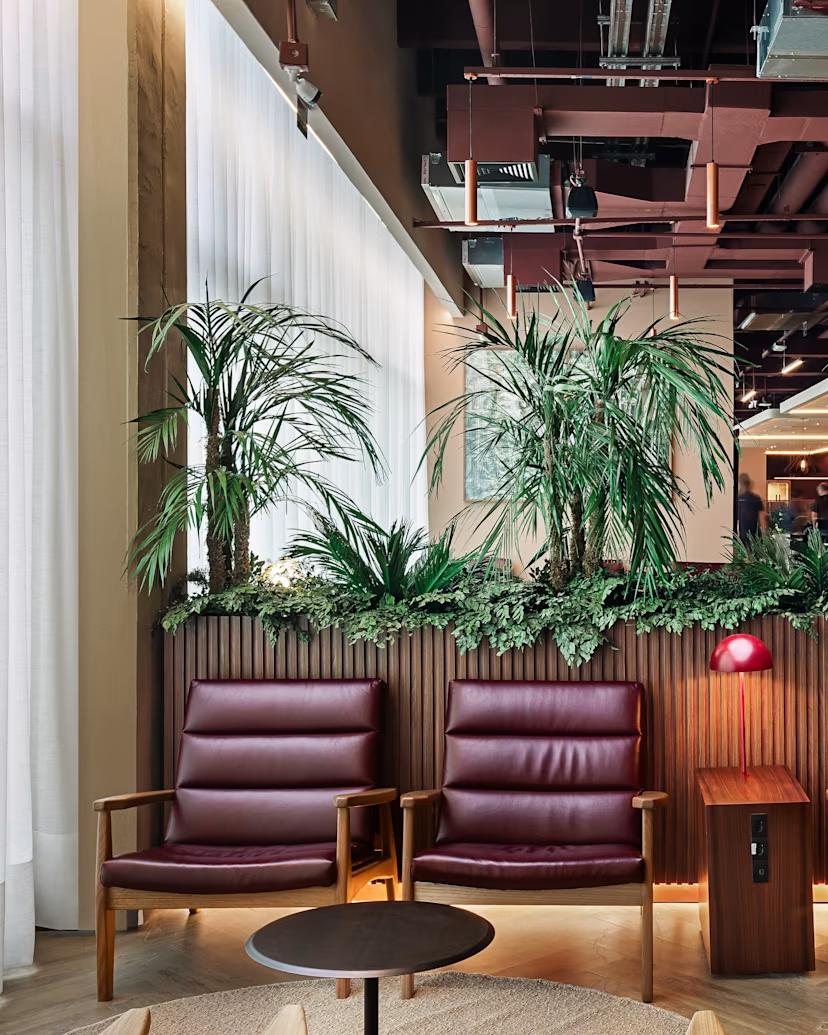
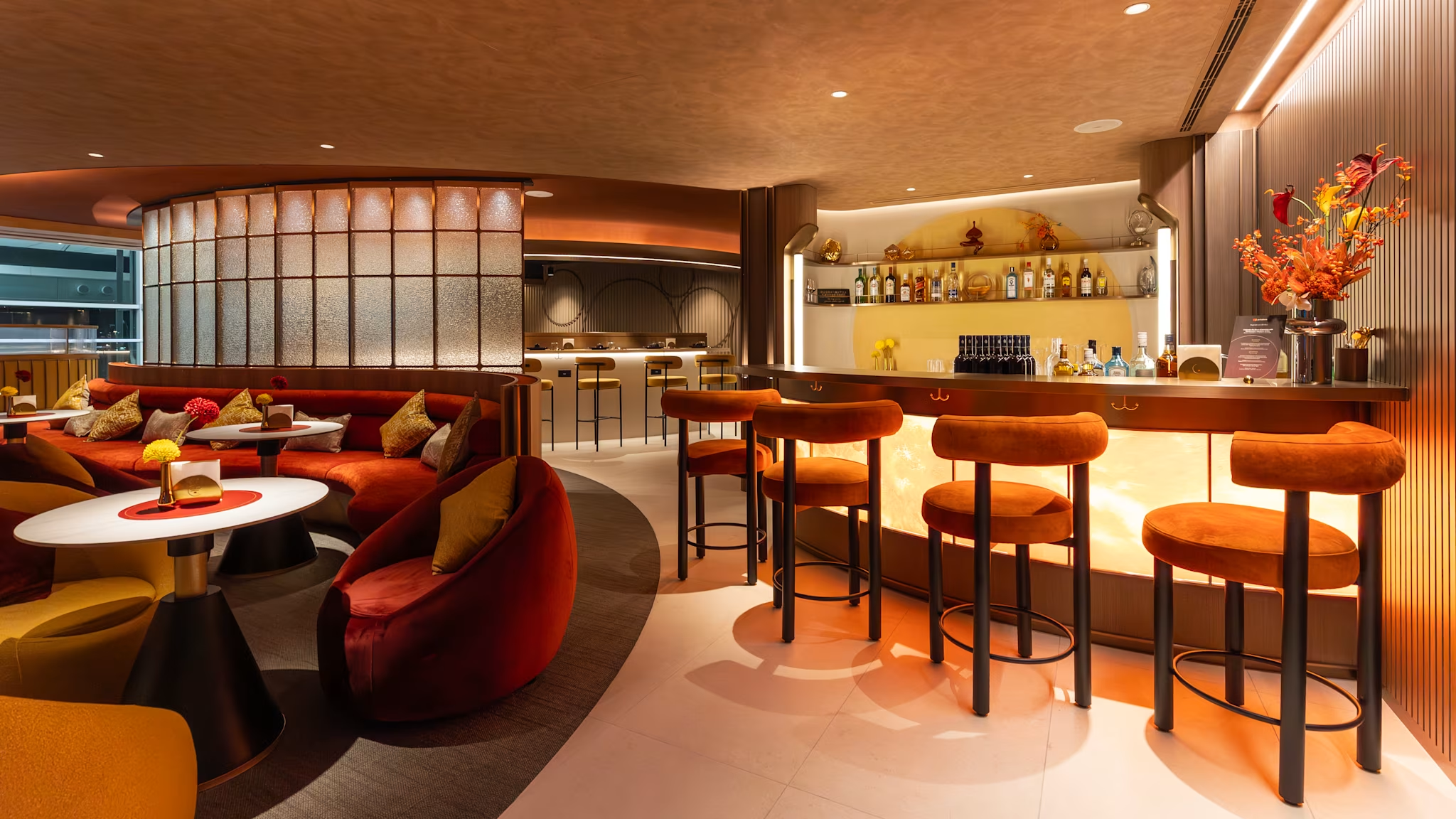
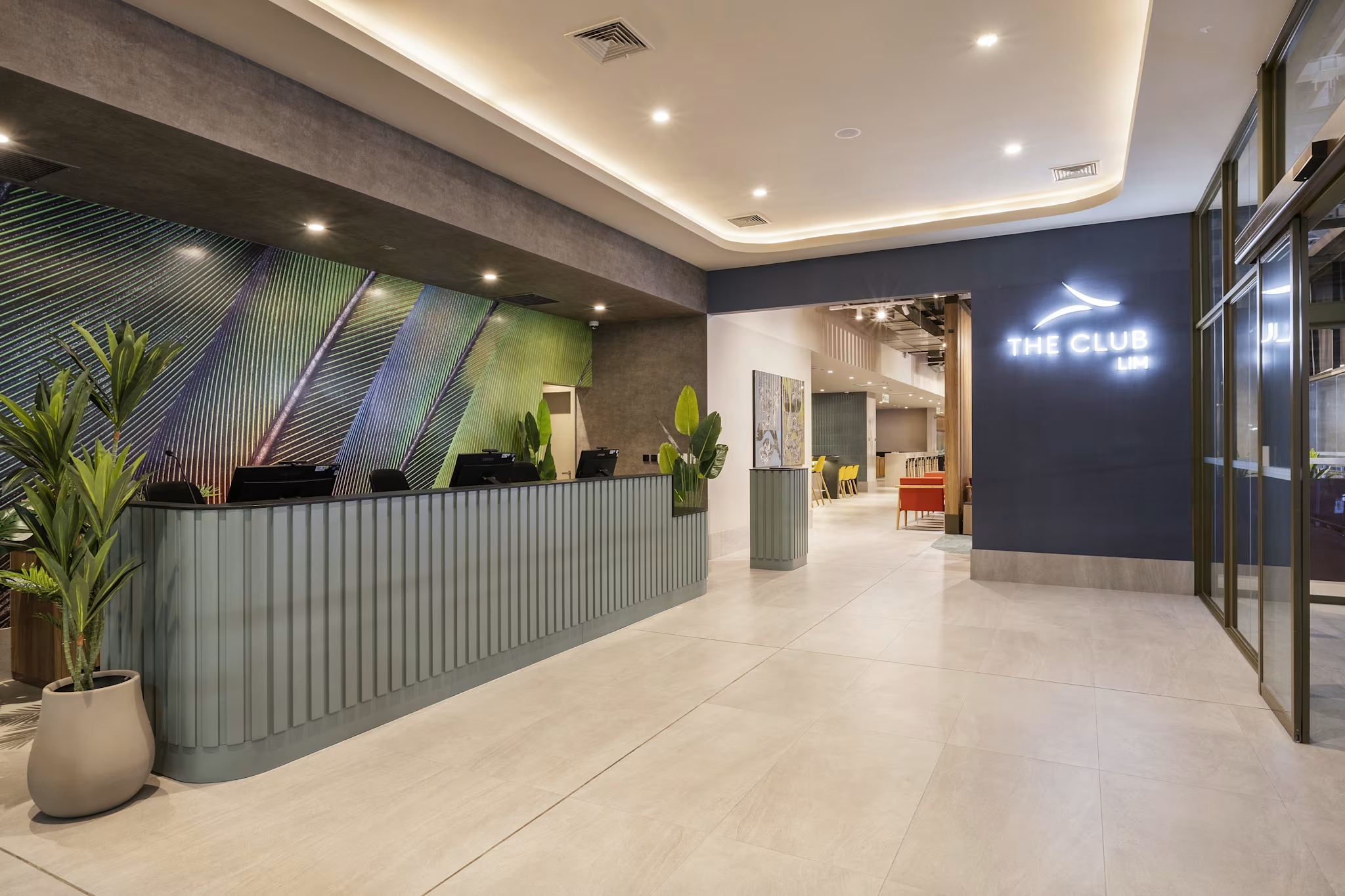
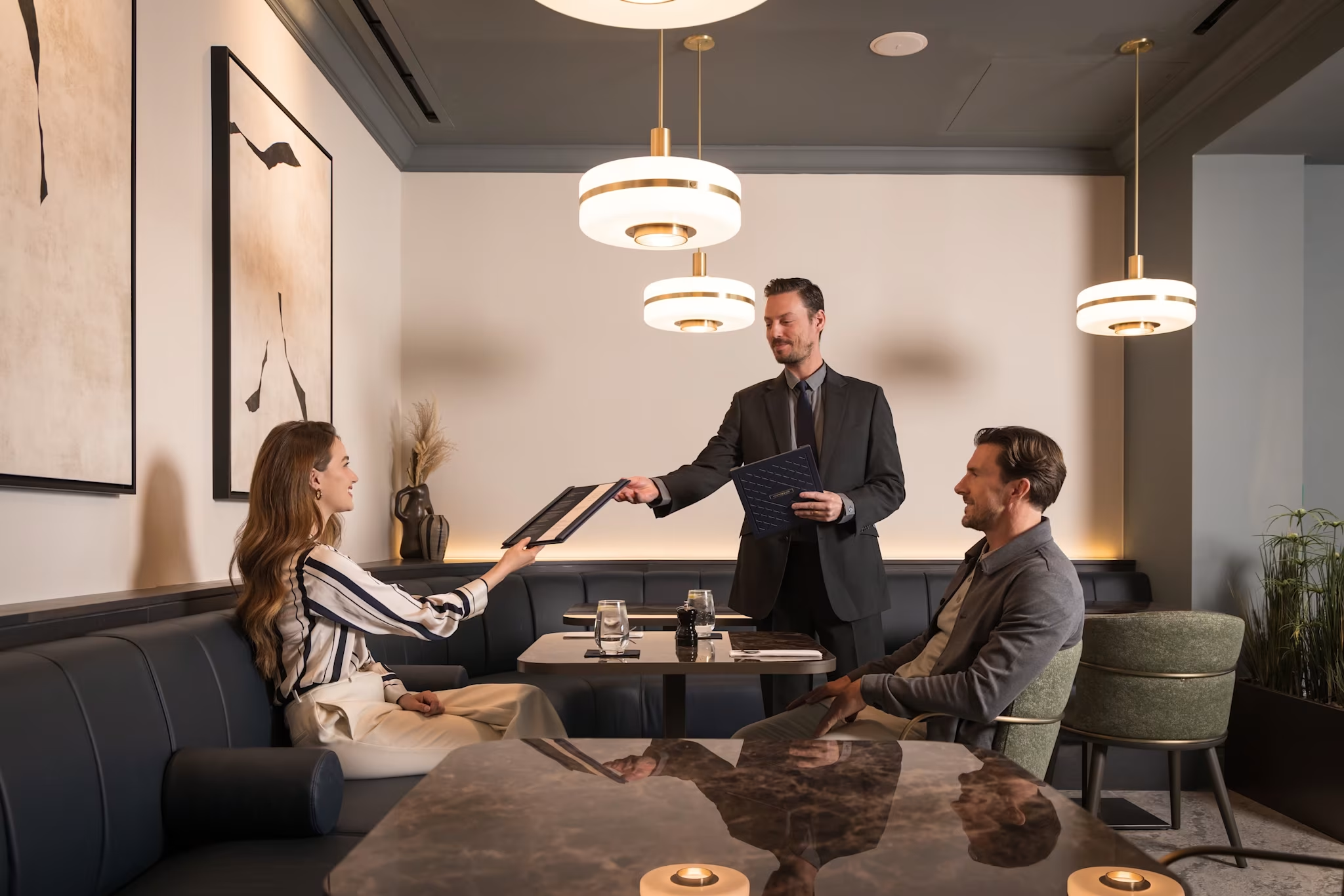
Within our own portfolio, this approach comes to life through a range of distinct formats. For travelers seeking privacy and a more refined, service-led experience, Clubrooms provide a quieter, more elevated environment. Our No1 Lounges offer a flagship experience that balances comfort, quality and style, while more informal, social concepts such as My Lounge appeal to those travelling in groups or with family. Alongside this, we also work with airport partners to create bespoke spaces that reflect local identity and brand alignment within the airport.
This evolution has not happened by accident. At Airport Dimensions, our offer has evolved over time, to move away from purely functional spaces, towards enhanced service models and improved food and beverages which reflect both local and international travelers tastes. We are creating spaces for travelers which are more intuitive and more considered, which ultimately better align to their wider needs. This reflects a broader shift in how airport experiences are being designed, with a more deliberate focus on hospitality and how people want to spend their time.
Food and beverages, for example, are no longer an afterthought, but an integral part of the overall experience, with expectations shaped as much by the high street as the airport.
It’s these small details that often have the greatest impact. But this isn’t just limited to food and beverages. How a space is laid out, how lighting is used, and how different zones support both privacy and social interaction all play a role in shaping how people feel and engage. It is this combination of thoughtful design and a more hospitality-led mindset that is redefining what a premium airport experience looks like today.
Understanding Regional Spending and Behavior
To truly understand why this segmentation matters, you have to look at how differently people spend their time and money. We see a significant "spending culture" gap across different regions. In the Middle East, for instance, the airport is a hub of retail and atmosphere, with over 60% of travelers identifying shopping as a primary behavior. In contrast, a traveler in Germany might be much more focused on utility and basic needs, where 40% of expenditure is directed strictly toward essentials.
Furthermore, the rise of the Affluent Leisure Traveler (ALT) has changed the game. While this group represents just 26% of travelers, they account for a staggering 57% of total airport spend. Globally, this group spends roughly four times more than other passengers, and they are looking for premium spaces that cater to their specific lifestyle.
This reinforces the need for a more tailored approach, rather than applying a single strategy across markets. Since 75% of these high value ALT’s use the airport lounge, this forms a critical part of their experience of the airport and offers us an opportunity to tailor how these customers engage with the airport to maximize both their individual experience and their spend as we see a direct correlation between satisfaction and spend. In the UK, for instance, we see a highly effective commercial model where spend is evenly distributed across retail, dining, and parking, reaching a strong average of $138. Compare that to the $160 average total spend for UAE passengers, and it becomes clear that it’s no longer sufficient to just opt for a blanket approach; it is about the need to connect with this group, understand their needs deeply, and find ways to cultivate and motivate increased spend.
Digital Engagement and the Future of Insight
As the airport experience becomes more personalized, digital is playing an increasingly important role in how passengers discover, access and engage with services. It has the potential to connect fragmented touchpoints, enable more seamless journeys, and surface more relevant offers at the right moment.
In Saudi Arabia and the UAE, digital platforms are a huge motivator for spending and engagement, with roughly a quarter of respondents saying online services motivate them to spend more. However, in European markets like the UK or Germany, travelers have been slower to adopt and engage with digital tools, with as few as 13% of German flyers believing these tools encourage them to spend. There is a massive opportunity for European airports to make up this ground. However, what matters is how intelligently digital platforms are used rather than just their presence.
When used effectively, digital tools enable more meaningful engagement, help passengers navigate choices and personalize their journey, and unlock greater value both in terms of time and money spent across their time at the airport. Take, for example the Connecta platform. It unifies digital and physical touchpoints across the airport into a single, connected system. The benefits are two-fold, again allowing passengers to personalize their airport experience, creating a foundation for insight led passenger engagement but also creating a singular source of truth for our airport partners when it comes to understanding passenger behavior and delivering relevant, timely experiences. Ultimately, the opportunity is to move beyond generic digital interactions towards something more human, responsive, and tailored. The future of travel will be defined by how well digital and physical experiences are connected, and how effectively they are used to respond to individual passenger needs.
At Airport Dimensions, we use real, actionable data and insight to tailor our products and services which improve travelers’ experiences and bolster non-aeronautical revenues for our airport partners. By understanding that one person wants a quiet place to work while another wants a premium cocktail before a holiday, we can create the bespoke, high-value environments that today’s travelers expect - which ultimately drives spend across the airport ecosystem. The future of travel is personal and premium, and we are committed to making sure that every passenger finds the space that feels right for them.
To Bring Fresh
Opportunities to Any
Challenge.
We believe airports should be places passengers enjoy
and that their enjoyment creates greater value for you.