
How Airport Expansion Could Impact the Passenger Experience

Significant expansion plans are underway at several major UK airports, from increased passenger capacity at Stansted to proposals for a new runway at Heathrow. In a recent conversation with Airside International, Errol McGlothan , President EMEA & APAC at Airport Dimensions, explores what these developments could mean for the passenger journey, examining both the opportunities they present and the challenges airports must carefully manage to protect the experience.
What impact do you believe the expansion of UK airports in terms of passenger capacity will have on lounges?
As UK airports expand and handle more passengers, lounges will play a much bigger role in how people experience their journey. Our Airport Experience 25 research (AX25), which surveys 10,000 travellers across 16 countries, shows that 66% of travellers already feel airports are becoming more crowded, and lounges provide one of the most effective ways to escape that pressure, offering calm, comfort, and a better overall experience.
This is reflected in our data too — lounge users consistently report higher satisfaction with their airport experience than non-users. As passenger numbers grow, demand reflects a broader passenger mix shaped since COVID, spanning leisure travellers, families, and business travellers. This broader mix is increasingly open to paying for a better airport experience through premium airport services, creating a clear opportunity for lounges to drive both passenger satisfaction and higher-value revenue as airports grow.
Can you expand on some of the positive impacts you think this will have on airport ancillary revenues, and also the potential negative effects in terms of overcrowding and passenger experiences?
Rising passenger numbers create a clear upside for airport ancillary revenues. More people spending more time in the terminal increases demand for premium, paid experiences that improve comfort and convenience. Our AX25 research shows that 62% of travellers globally would consider paying for one or more premium airport services, and lounges, fast-track options, and private spaces consistently rank among the most appealing.
As satisfaction improves, so does spend — satisfied travellers are more likely to engage with food and beverage, retail, and premium services across the airport.
That said, passenger growth also brings challenges around overcrowding, which can quickly erode satisfaction if shared spaces feel stressful or overwhelming. When this happens, travellers are more likely to disengage or rush through the terminal rather than spend.
Premium experiences such as lounges help relieve this pressure by giving passengers places to escape the crowds, supported by systems that streamline access and minimise queuing, protecting peak guest satisfaction. However, as demand for lounges increases, there is a growing need for additional lounge capacity to unlock higher-value revenue opportunities.
Major expansions are planned at Gatwick and Heathrow Airports, involving bringing new runways into operation. What impact do you expect these developments to have on the passenger experience?
We know airports are experiencing growing pressure on existing facilities, despite high levels of traveller satisfaction. These expansions, which add capacity, allow airports to mitigate crowding and evolve into more customer-centric environments that support higher-quality dwell time.
Creating environments that cater to evolving passenger needs also unlocks new revenue opportunities. Whether by supporting high-spend passengers or creating space for flexible solutions such as renowned dining brands and pop-up retail, passengers have indicated a strong desire for more choice and experience-led offerings.
Are there any other factors that you expect will have an effect on customer experiences in the short and long term? For example, rising passenger volumes and a growing preference for premium travel?
In the short and long term, several critical drivers beyond simple passenger volume are redefining the airport experience. A major factor is the shift toward digital transformation and personalisation. While global traveller satisfaction has reached a record, maintaining this success requires moving toward a unified digital passenger journey that offers travelers more control through mobile devices, which has become the norm in everyday life.
Our research shows growing demand for digital tools that make journeys more seamless and transparent, which can be delivered through platforms such as Connecta. Connecta unifies every passenger touchpoint into one intelligent journey, from pre-travel planning to take-off. It enables pricing clarity, amenity discovery, and pre-booking within a single, integrated experience, helping passengers plan and personalise their time at the airport. By reducing friction and uncertainty, journeys become more efficient, increasing satisfaction and spend.
Long-term trends show passengers increasingly want to choose specific services they value, such as private suites or dedicated entertainment zones. This creates an opportunity for airports to replace under-utilised space with flexible, regionally inspired concepts, transforming terminals from logistical hurdles into destinations travellers are willing to pay for.
Affluent leisure travellers are a key driver of this trend. They travel frequently, have higher household incomes, account for 81% of airport spend, and demonstrate a strong willingness to pay for premium services to avoid crowds. However, premium demand extends beyond this segment. Globally, 62% of travellers would pay for services such as priority check-in and fast-track security, signalling a broad opportunity for airports to expand premium offerings.
How is Airport Dimensions responding to these trends, and what is it doing to mitigate the potential negative impacts of overcrowding when faced with space constraints?
Airport Dimensions is acutely aware of the evolving pressures on airports, from rising passenger numbers to the challenges of limited space. We tackle this by combining smart use of space with digital tools that help make travel easier and less stressful.
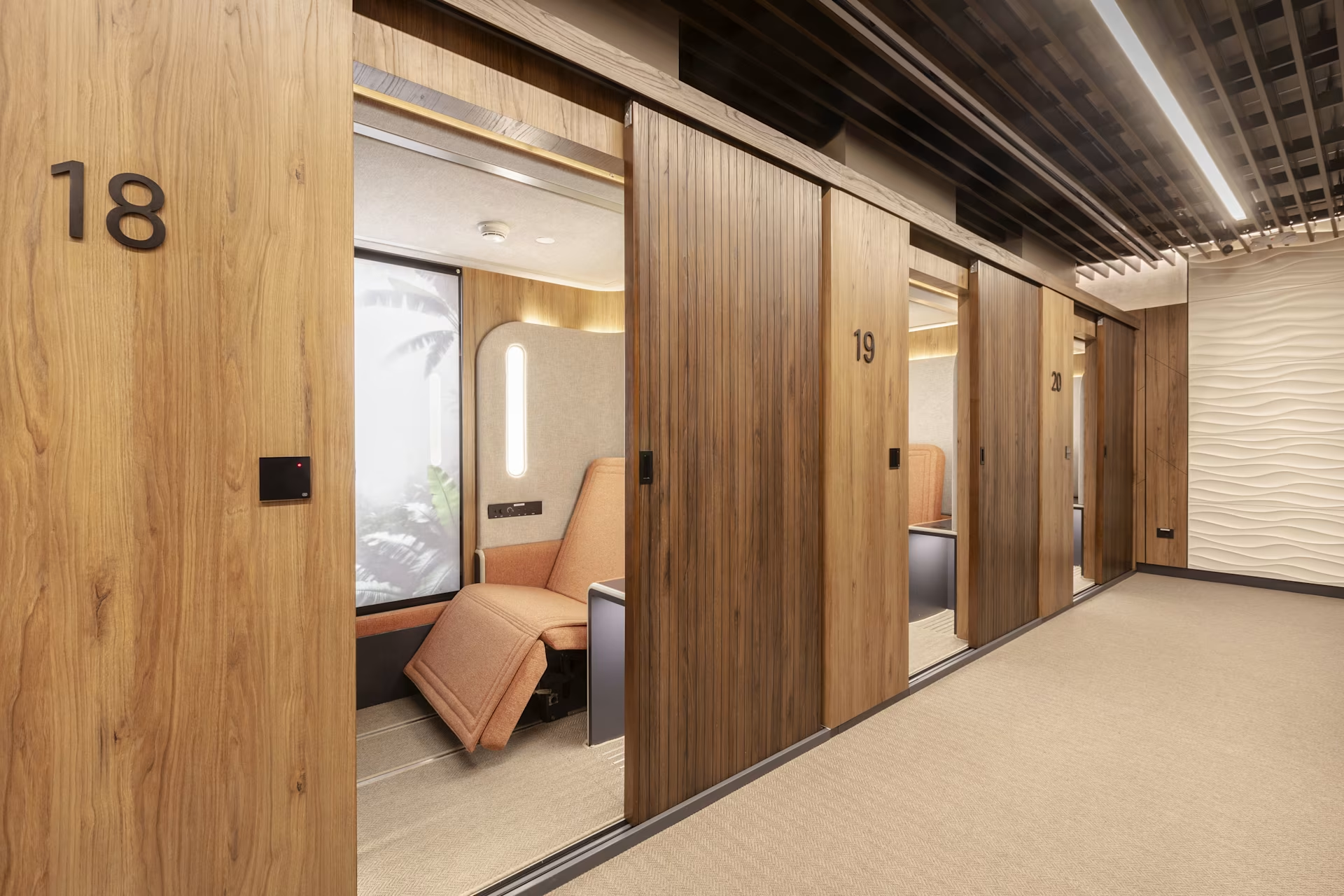
For example, our Sleepover concept can transform underutilised areas into private, bookable rest spaces, easing crowding in lounges and waiting areas.
At the same time, our Connecta platform gives passengers more control and certainty. Features like the virtual lounge waitlist allows travellers join a queue digitally during busy times, so they can spend their time at the airport more comfortably until a space becomes available.
Together, these solutions help passengers relax, reduce congestion, and improve satisfaction, while still delivering the premium experiences they expect.
What are some growing trends in the airport lounge sector that Airport Dimensions is focusing on, for example expanding digitalisation and the growing sleep, gaming and spa spaces?
There’s been a clear shift in passenger expectations within the airport lounge sector. Travellers are increasingly looking for more than just a place to wait – they want experiences that cater to rest, wellness, and entertainment. In fact, our research shows that 53% of travellers are now interested in entertainment amenities, while 49% specifically seek out sleep pod options.
At Airport Dimensions, we’re responding by expanding our offerings to include specialised comfort havens like our Sleepover Sleep Stations and gaming spaces such as Game Space to meet this demand.
Digitalisation underpins this strategy. Platforms such as Connecta enable travellers to discover and book services easily, with transparent pricing and clear value. By combining technology with flexible design, we are creating lounges that are more personalised and better equipped to manage flow.
Are there any planned openings of new lounges or any innovations you expect to introduce to your current lounges that you would be happy to share?
Momentum from a busy end to 2025 is carrying into 2026 for Airport Dimensions. We recently opened the Chase Sapphire Lounge by The Club in Las Vegas. In South-East Asia, our footprint has expanded through partnerships with SASCO and Blue Sky, including the renovated Rose Lounge in Ho Chi Minh City and the Blue Sky Premier Lounge at Jakarta’s Soekarno-Hatta Airport.
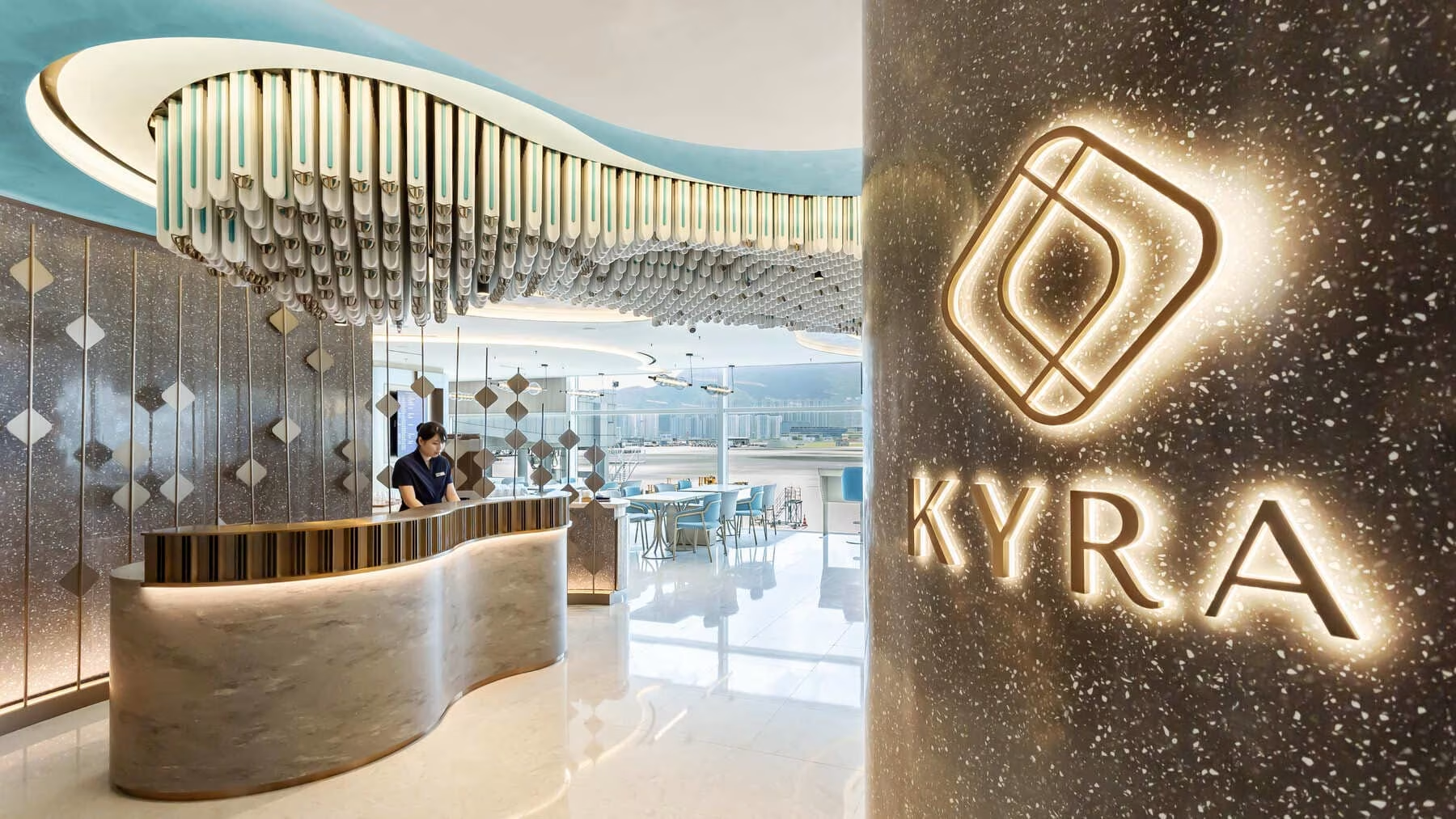
Looking ahead, we are preparing to open a new lounge at Hong Kong International Airport, strengthening our presence at this key global hub. Innovation remains a priority, with a new Sleepover station launching later this month and another lounge opening in Indonesia planned for February. These developments reflect our commitment to data-driven insight and flexible solutions that meet modern traveller needs.
To Bring Fresh
Opportunities to Any
Challenge.
We believe airports should be places passengers enjoy
and that their enjoyment creates greater value for you.